

Just Th: How to Focus Without Overthinking
You don’t need a better to-do list. You need a shorter one. How constraining your day to three things reduces overwhelm and restores momentum.
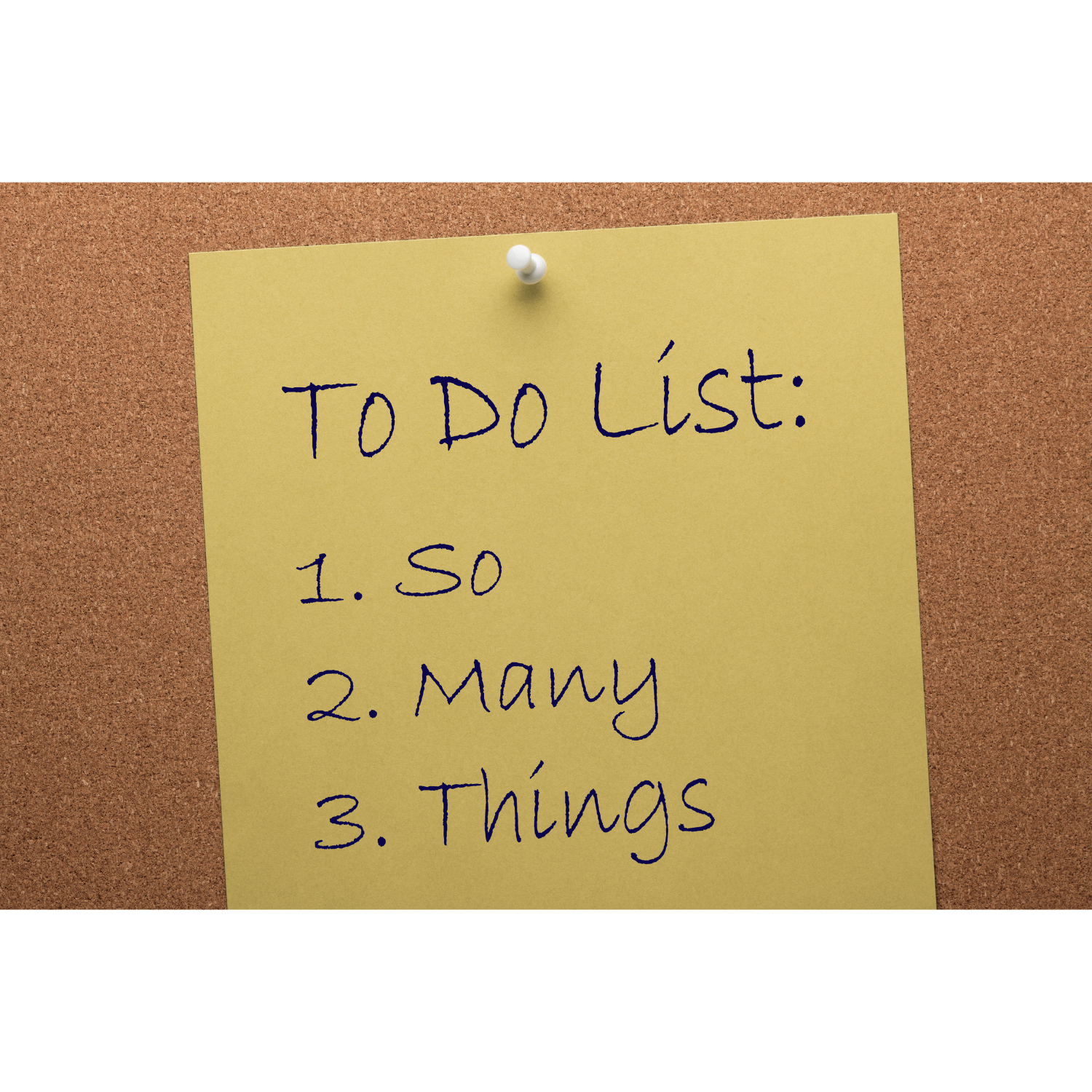
You don’t need a better to-do list.
You need a shorter one.
Because the problem isn’t that you don’t know what to do.
It’s that you know too many things you could do—and your brain is trying to hold all of them at once.
When everything matters, nothing gets done
A typical list looks something like this:
- 10–25 items
- some urgent
- some vague
- some half-defined
- some you don’t even want to do
And your brain treats all of them as open loops.
So when you sit down to work, you’re not choosing between three clear options.
You’re choosing between everything.
That’s not focus. That’s cognitive overload.
Research on working memory shows we can actively hold only a small number of items at once—roughly 3–5 meaningful chunks (Cowan, 2001). When we exceed that, performance drops and decision friction increases.
So the issue isn’t discipline.
It’s scale.
The shift: constrain your brain to something it can actually hold
The “3 Things” system works because it reduces your active decision set to something your brain can handle.
Not forever. Not even for the whole day.
Just for right now.
You take everything you could do—and narrow it to three.
Not perfect choices. Not optimized choices.
Just three things that are:
- clear
- doable
- visible
That’s it.
Why three works (and five doesn’t)
Three is small enough to reduce overwhelm, but large enough to preserve agency.
One feels rigid.
Five feels like a list again.
Three creates just enough structure without triggering resistance.
And more importantly, it reduces the cost of starting.
When you look down and see three things, your brain doesn’t need to evaluate ten alternatives. It just needs to pick one.
That’s a fundamentally easier cognitive task.
How to actually use it (in real life)
This is where most systems fall apart—they sound simple, but don’t translate to messy days.
Here’s how this one holds up:
You don’t replace your full list.
You translate it.
At any point in the day:
- Open your “All the Things” list (or wherever everything lives)
- Scan—not deeply, just enough to orient
- Write down three things you could realistically move forward right now
Not aspirational. Not ideal.
Realistic.
What changes when you do this
The shift is subtle, but immediate.
Instead of:
“What should I do next?”
you get:
“Which of these three feels easiest to start?”
That question is lighter. Faster. Answerable.
And once you start one thing, something important happens:
Momentum.
Research on the “progress principle” shows that even small forward movement increases motivation and engagement (Amabile & Kramer, 2011).
So the goal isn’t to pick perfectly.
It’s to start anything.
Where the product fits (without forcing it)
This is exactly why the “Three Things” notepad exists.
Not as another system.
As a constraint.
A physical limit that says:
this is what matters right now
Paired with the “All the Things” journal, you get both sides:
- Everything captured
- Only three active
That’s the system.
The quiet reframe
You don’t need to become someone who can manage everything at once.
You just need a system that stops asking you to.
References
Amabile, T. M., & Kramer, S. J. (2011). The progress principle: Using small wins to ignite joy, engagement, and creativity at work. Harvard Business Review Press.
Cowan, N. (2001). The magical number 4 in short-term memory: A reconsideration of mental storage capacity. Behavioral and Brain Sciences, 24(1), 87–185.
Designed for how your mind actually works.
Not how it’s “supposed” to.